
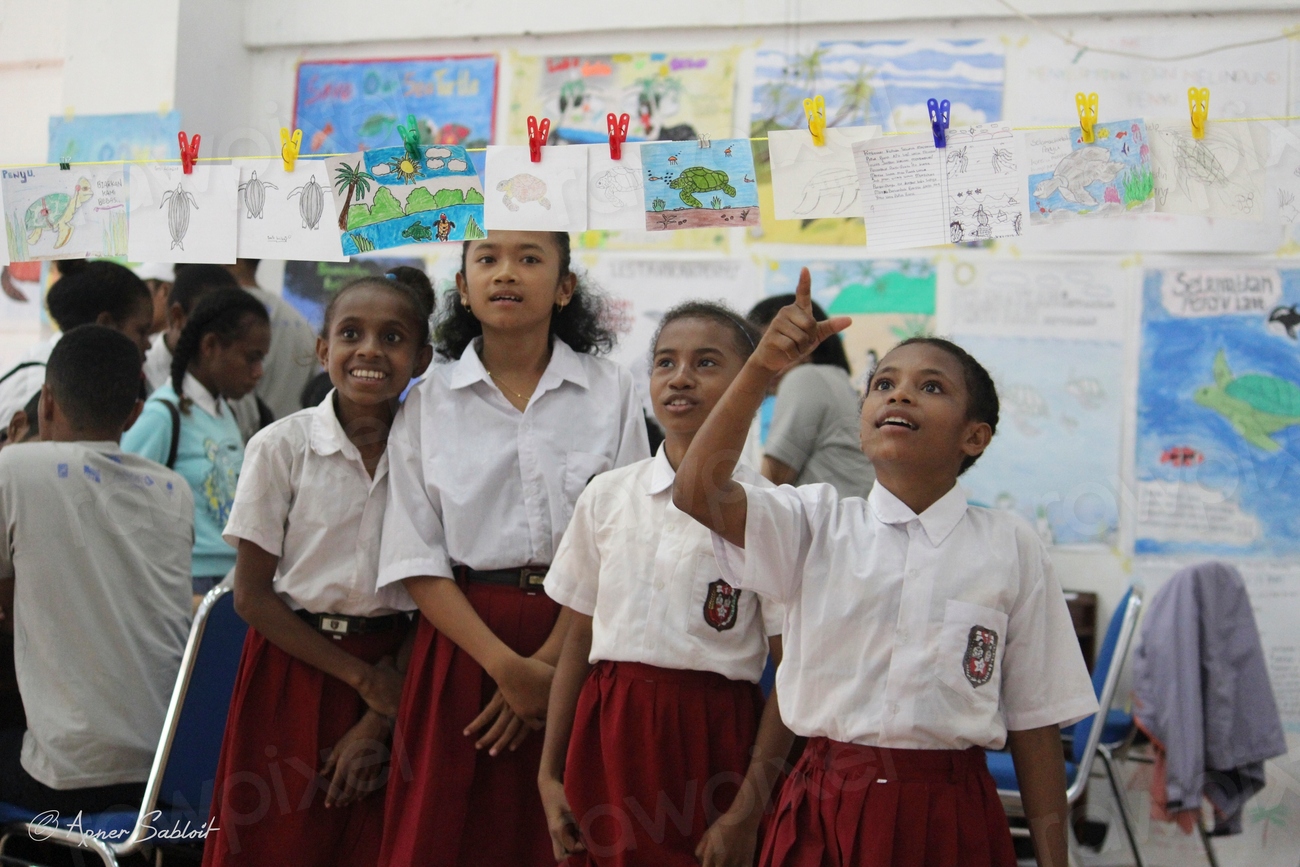
The education system plays a crucial role in building the social, economic, and cultural aspects of Indonesia. This article provides a brief overview of the education system in the country.
The Indonesian education system comprises several levels: primary, secondary, and tertiary education. Primary education consists of six years of elementary school (SD) and three years of junior high school (SMP). Secondary education includes three years of senior high school (SMA) or vocational high school (SMK). Meanwhile, tertiary education involves colleges and universities.
At the primary and secondary levels, a national curriculum is implemented, covering various subjects such as mathematics, science, Indonesian language, English, and history. Additionally, religious education tailored to each student’s beliefs is included. Schools in Indonesia operate under the Ministry of Education and Culture.
Higher education in Indonesia is managed by both public and private institutions offering various study programs across different fields of study. Well-known universities tend to have a good reputation, attracting students from all over Indonesia. The management of higher education is overseen by the Ministry of Education, Culture, Research, and Technology.
The education system in Indonesia consists of several levels: primary, secondary, and tertiary. Here is a more detailed explanation of the education system in Indonesia:
Primary Education
Elementary School (SD): Comprises six years, from grade 1 to grade 6. Junior High School (SMP): Lasts for three years, from grade 7 to grade 9.
Secondary Education
Senior High School (SMA): Lasts for three years, from grade 10 to grade 12. SMA offers various study programs such as Natural Sciences (IPA), Social Sciences (IPS), and Languages. Vocational High School (SMK): Focuses on specific skills and expertise related to the job market, offering vocational programs in various fields such as technology, health, tourism, among others.
Tertiary Education
Colleges/Universities: Offer bachelor’s (S1), master’s (S2), and doctoral (S3) programs in diverse disciplines.
The education system in Indonesia is regulated by the Ministry of Education, Culture, Research, and Technology (Kemendikbudristek), responsible for policies, standards, and oversight at all levels. Additionally, the National Accreditation Agency for Higher Education (BAN-PT) and the National Education Standards Agency (BSNP) are involved in regulating and ensuring the quality of education in Indonesia.
Despite ongoing development and improvement in the Indonesian education system, challenges persist, such as disparities in educational access between urban and rural areas, differences in educational quality, and resource limitations. To address these, the government continues to reform education, enhance teaching quality, expand access in remote areas, and strengthen vocational education programs to prepare graduates for the workforce.
Education in Indonesia is considered a crucial pillar in the country’s social, economic, and cultural development. With active involvement from the government, educational institutions, society, and families, it is hoped that the education system in Indonesia will continue to progress and provide equal opportunities for all citizens to access quality education.
In general, there are four evolving education systems in Indonesia. Here’s an explanation:
- UK-Cambridge System
The United Kingdom (UK) has one of the most rooted education systems globally. The UK houses many of the oldest universities globally, such as Cambridge (founded in 1209) and Oxford (1096).
Compulsory education in the UK was implemented in 1880 for children aged 5-10 years. In 2013, the education system extended the compulsory learning age to 18.
This system covers education from ages 6-18, emphasizing subject mastery and skills as primary focuses, including renowned qualifications like PSLE, O levels, and A levels, all internationally recognized in schools and related companies.
- European-International Baccalaureate (IB) System
International Baccalaureate (IB) is an educational system catering to children aged 3-19. It applies a broad curriculum, encouraging balanced subject mastery, student-centered learning, and a global context.
This system aims to foster lifelong learners with high learning enthusiasm and empathy. Global-scale research indicates that IB schools are most effective in nurturing mature graduates through a combination of curriculum resources beyond those provided by IB.
Manoharan Karthigasu, an education practitioner in Indonesia well-versed in the International Baccalaureate (IB) system, mentioned that this education aims to develop students with broad knowledge, well-rounded physically, intellectually, emotionally, and ethically. “This program also aims to increase motivation, confidence, and educate students to express their opinions. In this system, students are encouraged to apply what they learn to their surroundings. This makes the learning-teaching process more contextual and personally meaningful for children,” said Manoharan.
- National Education System in Indonesia
Indonesia has its national education system with compulsory 12 years of education. That includes nine years of basic education, consisting of six years in primary school and three years each in junior and senior high school.
This system, under strict supervision by the Ministry of Education and Culture, develops knowledge, skills, and attitudes. The intellectual, spiritual, and personal aspects of children are emphasized. However, over the last two decades, national schools have also adopted curricula like Cambridge’s.
- American System
This system emphasizes contextual learning through problem-solving skills and focuses on Science, Technology, Engineering, Arts, and Math (STEAM).
The emphasis varies and has various similarities in terms of a wide-ranging approach to learning styles and subject mastery. The American system can meet the educational needs of students from ages 3-18.
This age is deemed suitable for balanced knowledge, cognitive, and social development. Moreover, through an innovative pathway, students can shorten the total learning duration to just 14 years.
[…] Baca Juga : Education System in Indonesia […]
[…] Baca Juga : Education System in Indonesia […]